- tmrw
- Posts
- When the Rules Change
When the Rules Change
Markets don’t change all at once, capital moves first. This edition explains why investors who assume yesterday’s winners will keep winning often realize the mistake too late. It’s a practical framework for thinking about portfolios when the rules change and flexibility starts to matter.

Tom Stadum
January 22, 2026 • Read Time: 4 minutes

Hi, Tom here.
This is tmrw — a weekly note to help you protect what you’ve built and avoid the mistakes that matter later.
What you are about to read is was drafted before the news over the weekend regarding Greenland, and proves an important point about how you construct your portfolio.
Let’s get into it.


You have to know when the tides change, and move your money with it.
We talked last week about why drifting away from core positions in your portfolio can be a fool’s game and why U.S. large cap stocks are uniquely poised to continue their dominance in the 2020s.
I’ve been stubbornly “overweighting” U.S. large caps for years as a professional investor. In fact, my personal bias towards the U.S. and my previous employer’s views on international were a key difference that led me to launching Fjell in 2020.
So far, that’s been a great call.
I wrote that last week you want to be right in the important areas to be a successful investor, not to abandon what’s working because a new, flashy investment opportunity came your way.
This week isn’t meant to contradict that idea, but rather share with you how to change your mind, allocate differently as investors, to challenge your own closely held convictions.
The mistake people make is assuming capital will keep rewarding yesterday’s winners even after the rules have visibly changed.
Remember:
Good investors know to buy.
Great investors know what to buy.
Legends know when to sell.
Put another way: you have to know when the tides change, and move your money with it.
That gets us into the current state of international affairs, deglobalization, and capital flows.
Each decade thus far in the 2000s has been marked by starting and ending with economic carnage.
The 2000s started on the heels of the internet bubble and ended with the financial crisis. The 2010s started out with the financial system coming off of life support and ended with the beginning of the pandemic. The 2020s started with the pandemic and hopefully it’ll end not like the first too.
As the world dealt with COVID, a trend emerged that will shape the rest of this decade: the ethos of “each country after itself.”
Nationalism has always existed. What’s changed is how this has shaped the global flow of capital.
Just take this headline from Tuesday: Ray Dalio warns that “capital wars” could follow Trump’s actions, with countries dumping U.S. assets.
What does that mean for you?

Follow the money
The goal of investing is simple: buy things that produce growing profits.
This century, American markets have been the place that has been doing that, on average, the best. Because of this, they’ve been like a magnet for money flows.
Obvious, but what happens if capital starts flowing differently in the future?
Well, that is what is happening with deglobalization.
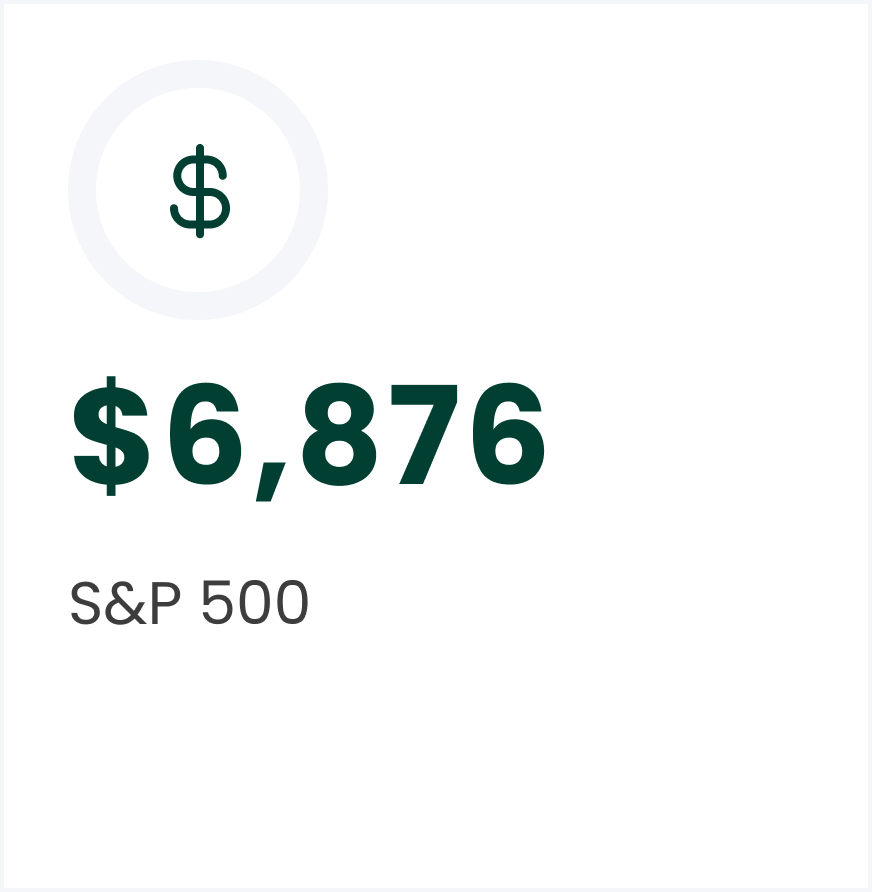
Last year, UBS released a memo that estimated a 5% rebalance from European investors would reflect a $1 trillion outflow from U.S. markets. The size of the S&P 500 is about $62 trillion. If you are doing some basic math, a $1 trillion outflow is not inconsequential vs the size of the S&P 500.
But what I didn’t write in that past edition is what that rebalance would do for EU stocks.
If $1 trillion was brought back into the roughly €23 trillion European stock market, that would theoretically have twice the impact on the market as the money coming out of the U.S.
Demand would increase meaningfully, along with stock prices.
Turns out that wasn’t theory. Here is how last year unfolded for German stocks vs the S&P 500:

MSCI Germany vs S&P 500
Here’s where I got deglobalization wrong: I underestimated the power of survival when parsing through the effects of the new international stage and portfolio construction for our clients. Countries, and the people and companies within them, don’t just sit around singing kumbaya while we do our thing stateside. They will use what they have to survive first, then grow, then deal with the consequences later.
They voted with their money.
Germany amended their constitution to allow the government to take on debt to strengthen its economy and defense in light of deglobalization and the Ukraine / Russian war, a stark change for the country.
The U.S. has amended the Constitution once in the past 50 years, that was in 1992, amending Congress member’s ability to give themselves pay raises in current sessions.
Foreign countries, and people said, “I don’t care if we don’t have Google, or Amazon, or CrowdStrike, or Netflix, we will fix ourselves. We’ll throw money at the problem until it’s fixed, future generations will be better off if we do it this way than not change. The cost of inaction is too high.”
The results of this spoke for themselves last year.

What I am not saying here is to abandon the U.S. markets because now is the time for international markets to thrive.
No, that’s not what this is.
This is about how you change your mind as you invest when situations change.
We at Fjell still believe strongly in U.S. equities and the U.S. advantage, but we’re also aware that other markets can, and will, present opportunities we’d be foolish to ignore.
A theme that not a lot of people have been discussing in light of the new international stage is the other side of the spectrum, what other nations will do in light of this, and what opportunities will that present to global investors.
Whether the German market “deserved” its stellar return last year is irrelevant. The people choose. The capital moved. Prices adjusted. Markets did what markets do.
It doesn’t matter if I or you or anyone else think they “deserve it” even though the performance resulted for reasons that perhaps went beyond traditional investing.
If your framework of investing assumes winners never change, it’s hard to call that investing, because things do change.
Deglobalization will and already has shaped your portfolio, and your financial future.
Tom
The layer beneath “do this” didn’t exist.
I grew up in a household of financial advisors. My grandfather Cliff became an advisor in 1961, my father followed his footsteps in 1992, and I joined the ranks in 2013.
I’ve worked with many successful families all across the country through my firm, Fjell Capital.
tmrw exists to give perspective on keeping money, to protect what you’ve already built and find deeper freedom.

How helpful was this week’s edition?Comment after you submit. Your feedback helps shape what I write in future editions. |

 |  |  |



